
I was going to open this with “take me back to 1992,” but honestly? I was probably there. Or at least I tell people I was, which in Ibiza counts as the same thing. My knees click now when I climb stairs. My phone has forty-seven apps for finding a toilet. Back then I had a scooter, no helmet, a sunburn that could qualify for EU funding, and absolutely no idea who was playing. That was the point.
This is not a nostalgia piece about how everything was better. It might have been. It might also have been terrible and I was too young and dehydrated to notice. What I do know is that Ibiza in the early nineties, call it 1992, because round numbers help the delusion, was a different planet. No Instagram. No DJ Mag fan votes. No LED walls the size of a municipal budget. You went out, you sweated on strangers, you heard a record you would not identify for another decade, and you went home convinced you had touched God. Possibly through a pill someone called a dove. We do not need to litigate that here.
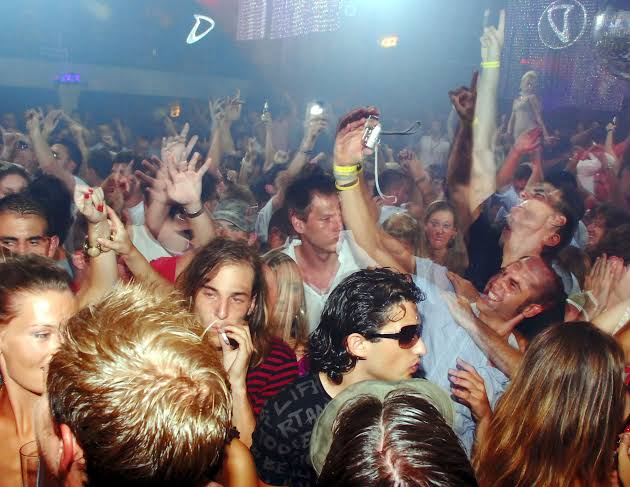
The clubs (and the ones you actually remember)
Everyone talks about the big five. Fine. Let us do the homework.
Space, still the spiritual home of the after-after-party. In ’92 you did not “headline” Space so much as survive it. Pepe Roselló’s terrace club had already become the place where the night refused to die. Resident DJs like Reche, who had jumped from Playboy 2 straight into the booth at twenty, understood something the British lads would later steal and rename: play for the room, not the mirror. Space’s famous terrace meant you danced at sunrise with people who had not been to bed since Tuesday. Nobody filmed it. Thank Christ.
Ku, now Privilege, then the aircraft hangar with ambition. The roof saga is pure Ibiza opera: forced to cover the open-air madness in the late eighties, the structure collapsed in 1990, rebuilt, and by ’92 Ku was in a strange purgatory, too big to fail, too wounded to feel magical every night. Owner José Antonio Santamaría was murdered in San Sebastián that same year, which is not a fun fact but it is a fact. The giant fans at the back of the room looked like industrial art and sounded like salvation.
Amnesia, where Alfredo Fiorito had already done the damage. Argentine journalist turned candle-seller turned DJ, handed the keys in 1982, built the eclectic morning sets that made four British tourists lose their minds in 1987 and go home to invent acid house. By 1992 Alfredo was legend, not celebrity. You did not ask for a selfie. You did not know what a selfie was. You asked the taxi driver if Amnesia was “on tonight” and he shrugged like you had asked whether the sea was wet.
Pacha, cherries, cherries, cherries. The club that proved Ibiza could be glossy before glossy was a content strategy. Even in ’92 it had the feeling of somewhere important people went to pretend they were not important.
Es Paradís, yes, that is the one people slur as “Les Paradis” after their third Hierbas. San Antonio’s glass pyramid, Pepe Aguirre’s beautiful music box, enclosed in 1990 when noise laws killed open-air dancing across the island. The water party was already a religion. Clockwork Orange would not launch until 1994, but the groundwork was laid: British promoters, daft costumes, and the firm belief that wet clothes are a personality.
Then the ecosystem the brochures skip. Extasis, not ecstasy, though the pun wrote itself, a worker’s club under a hotel in San Antonio where the people who flyer’d all day finally danced at night. Kiss in the West End, later El Sol, a bar where half the island’s gossip fermented. Smaller rooms, cheaper entry, no guest list except “do you know Marco?” Marco knew everyone. Marco also owed everyone money.
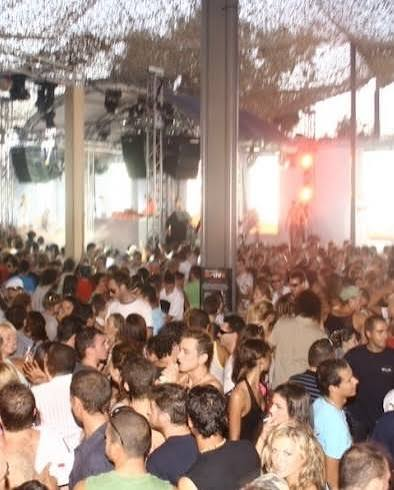
Nobody was famous (which is how fame happened)
Here is the bit that makes modern DJs weep into their rider. In 1992 you could be the most sought-after resident on the island, Space, Amnesia, wherever, and earn something in the region of four thousand euros a month. Good money. Normal money. Not “I bought a vineyard” money.
Sasha reportedly played for five thousand pesetas around 1990. That is not a typo; that is a different economic universe. The super-DJ fee explosion did not really detonate until the mid-nineties, when Mixmag started writing articles about £1,500 appearances like they were armed robbery. In ’92 the booth was still a job. You turned up, you read the room, you maybe helped carry a flight case because the driver was late and the opener had food poisoning. Stagehand duties were not beneath you because you were the stage.
Paul Oakenfold, Danny Rampling, Nicky Holloway and Johnny Walker had already made their infamous 1987 pilgrimage to Alfredo’s Amnesia and gone home to mutate British nightlife. By ’92 they were becoming names, but on Ibiza they were still just guys in good shirts asking what track that was. Carl Cox was building. Reche was already a decade into island life. David Guetta was not yet a superstar; he was a French kid who would later ask to play a back room at Pacha’s Zenith night because nobody had heard of him. The fame came later, like a hangover with management.
Headlining? Sure, if you mean your name was on a poster photocopied at a shop in San Antonio. “Headliner” did not mean forty thousand people live-streaming your drop. It meant three thousand people who had never heard of you and would never need to, because the night was the product, not the face.
Marketing before the internet (aka shouting)
Promotion in 1992 was gloriously stupid and brutally effective. No algorithm. No retargeting. You had:
- Flyers, A5, bad fonts, worse grammar, folded out to reveal a bar name and a promise of “FREE SHOT BEFORE 1AM.”
- Flyerers, British kids who came for a week, stayed for the summer, ran out of money, and stood on the West End at 2 p.m. sunburned and evangelical. Points system. Guest list as currency. Rent paid in commission.
- Word of mouth, “We’re going Ku tonight.” “Nah, Amnesia then Space.” End of strategy meeting.
- Radio, the real cheat code.
Local FM was everywhere. Pirate rigs, car stereos as studio monitors, experimental transmitters that reached maybe five hundred metres until someone proper gave them a tower. You rode your scooter, no helmet, wind in your eyes, Hierbas on your breath, and the island soundtrack came through crackly speakers: house, Balearic oddities, the record you would beg the DJ to replay at midnight. Radio Ibiza Paradise’s origin story literally involves a teenager building a transmitter and broadcasting from a bedroom; later they rigged live feeds from clubs using a car radio as a receiver. Professional? No. Ibiza? Absolutely.
By day the radio set the mood. By night the clubs cashed the cheque. Tourists from Manchester, Berlin, Milan, they did not discover Amnesia on TikTok. They heard a scooter zip past playing something they could not name, followed the sound, and made bad choices with excellent timing.
Anecdotes (some verified, all felt true)
The tourist: A lad from Birmingham told me, last year, in a pub, which is how all Ibiza stories should be audited, that he spent his first summer sleeping on a sofa and flyer’ing for Eden. Made rent twice. Got on every guest list. Went home with hepatitis, a tan, and the phone number of a DJ who turned out to be a waiter. He called it the best summer of his life. He now sells insurance.
The DJ: Reche went from local radio assistant in ’87 to Playboy 2 to Space resident at twenty. In ’93 he skipped a season for Tahiti Beach after-hours, daylight dancing that rewired what “afterparty” meant. Nobody wrote a think piece. They just showed up in swimwear and lost another day.
The famous almost-person: Alfredo kept playing pop, soul, funk and early house in the same set because the island demanded it. The British four heard Manuel Göttsching and Elkin Nelson in the same night and went home to start a revolution. Alfredo was not trying to start a revolution. He was trying to keep people dancing until the sun apologised.
Me: I once carried a subwoofer up a flight of stairs at a San Antonio bar because the “DJ”, a lovely man called Jordi, had promised me a free drink. I was not a roadie. I was an idiot with good upper-body strength and no boundaries. That is the job description for Ibiza in 1992.
Maybe it was me
People my age love saying the clubs were better then. Maybe. Or maybe we were younger, less documented, and chemically assisted in ways that flatten memory into highlight reels. The toilets were worse. The sound systems were sometimes heroic, sometimes a crime. You could lose your friends for six hours and consider it a spiritual journey.
What was genuinely different was the ratio of mystery to marketing. You did not pre-game a set list on YouTube. You did not know the DJ’s skincare routine. You went in blind, danced with strangers who might have been from any country, and came out changed, or at least damp.
Space still exists in spirit. Ku became Privilege and closed. Amnesia carries Alfredo’s ghost in every sunrise set. Es Paradís still floods the floor. Kiss became another name on another door. Extasis lives only in flyers and forum posts. The scooters still buzz, though now half the riders wear helmets because progress is a buzzkill.
I am not saying go back. You cannot. I am saying I was there, or near enough, when the booth was a job, the radio was the hype machine, and nobody was famous yet, which is exactly how fame found them. My back hurts. The music was worth it. Probably. Ask Marco.